
Launch Event of the Cambridge Centre for Chinese Theology
It is autumn again in Cambridge.
The ancient courts lie bathed in a golden quiet, sunlight spilling gently over the timeless grounds of the University of Cambridge. On the day appointed by the Heavenly Father — 2 October, A.D. 2025 — the Cambridge Centre for Chinese Theology was formally established. Through the vision and generosity of the Lux Mundi Foundation, the earnest prayers of the saints, and the devoted collaboration of scholars and pastors, the Centre came into being.
As a milestone in the movement of Chinese Christian theological studies initiated by the Institute for Advanced Studies in Chinese Christianity (IASCC), the Centre seeks to foster global and intercultural dialogue among Chinese theologians, and to serve as a bridge between Western and East Asian theological institutions and scholars.
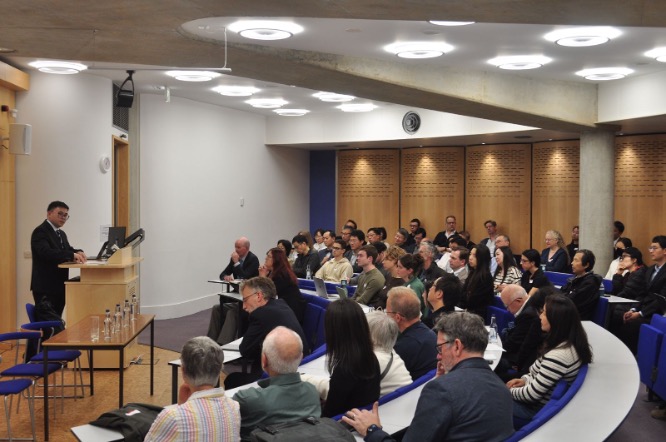
The founding ceremony was witnessed by representatives of Lux Mundi, together with Christian scholars from China, the United States, and Europe, who gathered to share in this moment of grace and history.
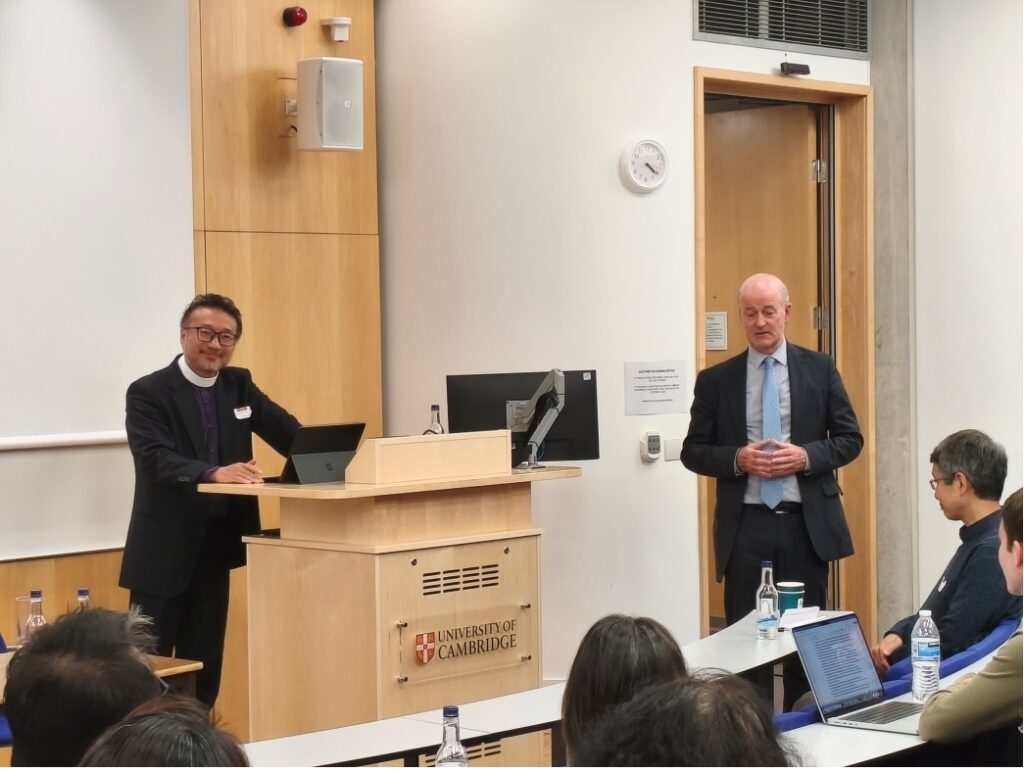
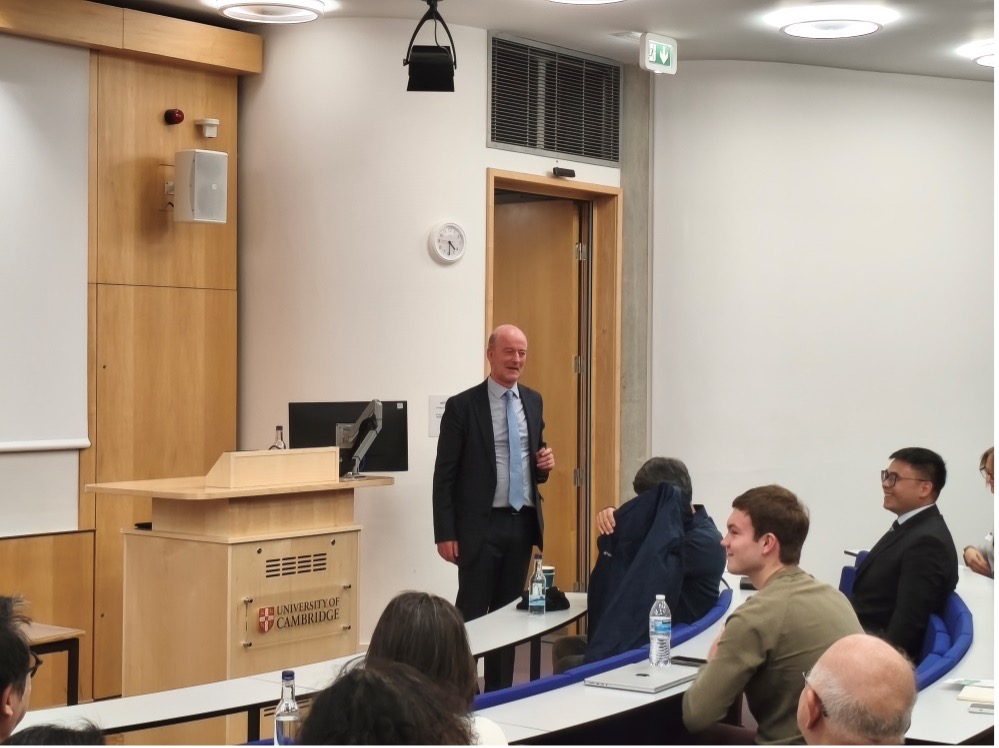
Professor David Fergusson, Regius Professor of Divinity and Fellow of the Faculty of Divinity, University of Cambridge, and Co-Director of the Cambridge Centre for Chinese Theology, delivered the welcome address and stated that the new Centre would enable the Faculty of Divinity at Cambridge to further extend its research and teaching influence in the field of World Christianity.
Following the welcome, Dr. Simeon Xu, Co-Director of the Centre, offered an introduction to the Strategy and Mission of the Centre.
He highlighted the long-standing relationship between Cambridge and Chinese Christianity, dating back to the time of the Cambridge Seven and extending to the present flourishing of Chinese churches in China and around the world.
Chinese Christianity, once perceived as distant and unfamiliar, is now increasingly recognized as an integral part of global theological reflection.
The Centre will focus on three key objectives:
- To extend the research scope of academic theology in the UK and beyond.
The Centre will engage deeply with Christian theology as it is expressed within Chinese culture and among Chinese communities, addressing an area still under-represented in mainstream Anglophone theological discourse.
- To catalyse exchange and collaboration between Western and Chinese theologians and religious thinkers.
It will create opportunities for dialogue and joint reflection on key theological themes from diverse cultural and philosophical perspectives, promoting the cross-cultural flourishing of theology.
- To foster international academic partnerships in the study of Chinese theology.
The Centre will build networks among universities and scholars across Europe, North America, and Asia, facilitating collaboration on issues shared by Chinese and Western Christian communities.
The work of the Cambridge Centre for Chinese Theology will revolve around three primary goals:
- 1. Broadening the Landscape of Academic Theology
In recent decades, Chinese Christianity has received and reinterpreted much of the world’s theological heritage, yet its voice remains faint in English-speaking scholarship.
The Centre will seek to illuminate these expressions of faith — to listen, to translate, and to share the riches of Chinese theological thought with the global community.
- 2. Promoting Global Dialogue and Collaboration
The Centre will serve as a meeting place for theologians from China and the West, encouraging shared reflection on faith, culture, and the human vocation before God.
- 3. Building an International Network across Continents
Through research partnerships linking Europe, North America, and Asia, the Centre aims to create a sustained fellowship of inquiry — one that transcends geography and denomination, and unites those who seek wisdom in Christ.
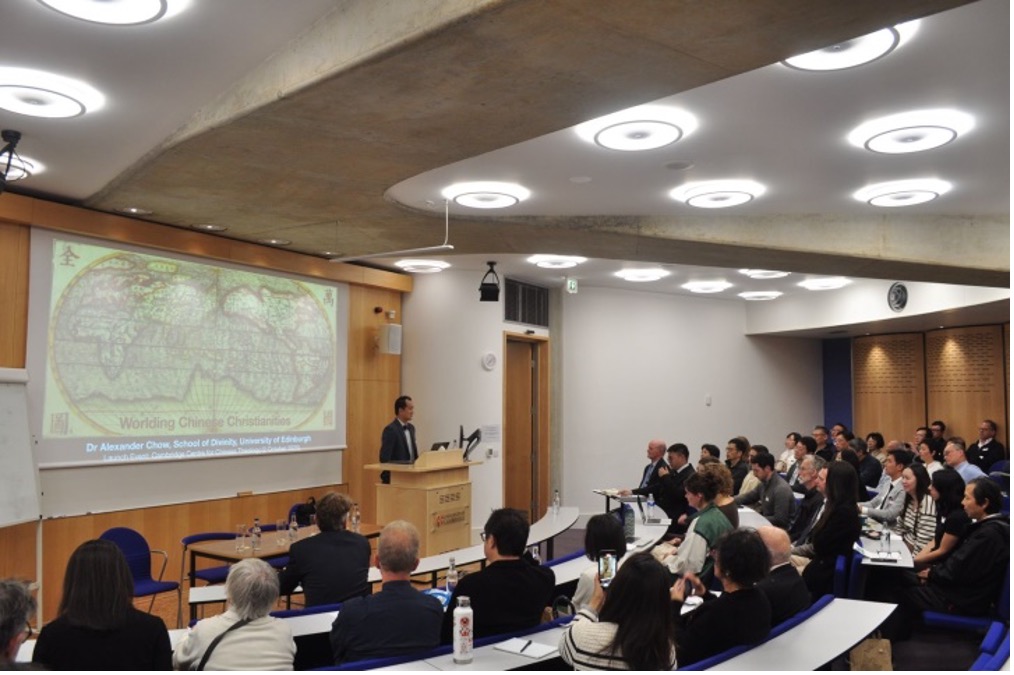
The lecture, “Worlding Chinese Christianities”, was delivered by Dr lexander Chow, Senior Lecturer in Theology and World Christianity, and Co-Director of the Centre for the Study of World Christianity, in the University of Edinburgh. He underscored that Chinese theology is part of global Christian theology and serves for World Christianities and the wider world church.
In his Lux Mundi Address, Rev. Dr. Jonathan Li offered both historical reflection and theological vision. He reminded the audience that the story of Cambridge and China is woven from both faith and scholarship—a shared pursuit of truth and understanding.
He emphasized that the establishment of the Centre is not a continuation of missionary work, but rather a new academic endeavour: a scholarly commitment to understanding Christianity as a global phenomenon, rooted in local contexts and reshaped through cross-cultural encounter.
From Matteo Ricci’s missions in the sixteenth century to the growth of China’s contemporary house churches, Christianity in China has never been a one-way transmission; it has always been a dialogue of faith, culture, and intellect—a continual process of translation between heaven and earth.
The Centre, therefore, stands to study Christianity not as a possession of the West but as a living story written by the Spirit in many languages and cultures.
Christianity has never had a single centre: it flourishes today in Africa, Asia, and Latin America, and China—with her long traditions and centuries of searching—now holds a luminous place within this global narrative.
Rev. Dr. Jonathan Li concluded with a call for collaboration and a vision for future: “This centre is also a promise- a promise to pursue truth with humility, to listen across differences, and to honor the complexity of human experience.”
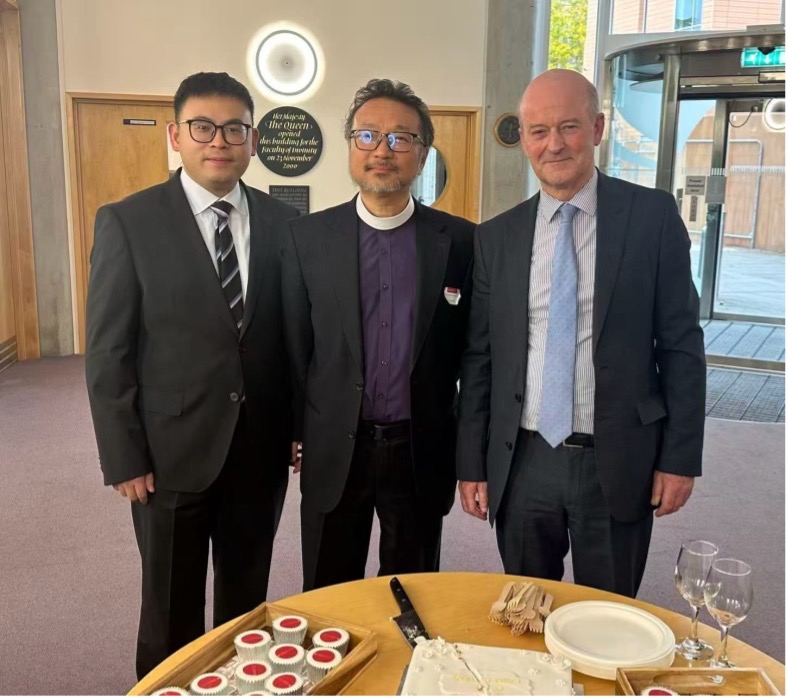
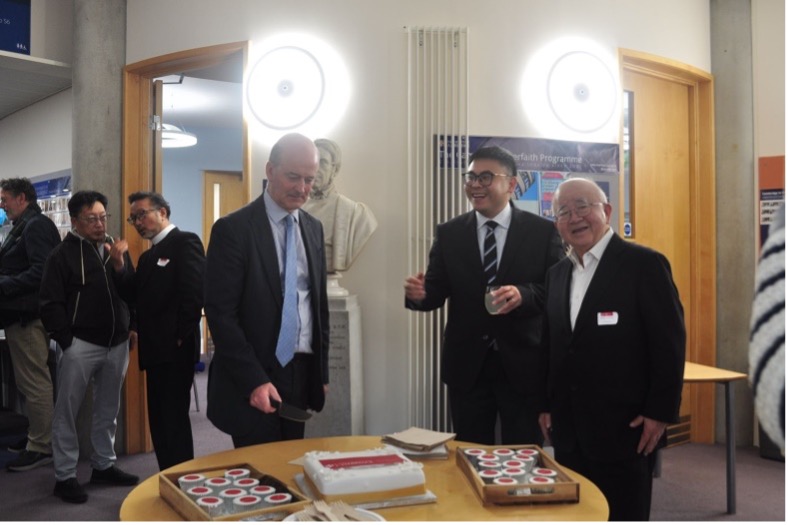
After a lively exchange of questions and reflections, the participants joined in thanksgiving and celebration.
The year 2025 marks the 140th anniversary of the departure of the Cambridge Seven for China in 1885. A generation of faithful witnesses has passed—will another be raised to renew their testimony in our time?
As the world moves through conflict and uncertainty, we seem to stand at the turning of an age—one once graced by gentleness and faith.
The noise of the secular grows louder, the spirit of the age more restless—as though time could never turn back, and yet grace returns in ways unseen.
Yet surrounding us remains a great cloud of witnesses, saints whose faith still shines across the centuries. Their endurance reminds us that history moves not only forward in time, but also within the providence of God, who gathers all things unto Himself.
And so we, who yet remain in this life, lift our voices with one heart and one hope:
May the Heavenly Father hear our prayers.
May His will be done on earth as it is in heaven.
May His blessing rest upon the Cambridge Centre for Chinese Theology,
and may His grace abide with China and the Church throughout the world.